French Etiquette in Paris: The Dos and Don'ts That Make Locals Warm to You

Here is the single most useful thing to know before you land: in France you greet before you do anything else. Walk into a bakery, a boutique or a pharmacy and the first word out of your mouth should be Bonjour, not your question, not "excuse me", not silence. That one small habit is the master key to French etiquette, and it quietly explains most of what visitors mistake for coldness. Get it right and Paris opens up; skip it and you will feel a chill you never meant to cause.
This guide is a friendly map of Paris etiquette dos and don'ts: how to greet, how to dine, how to behave in a cafe, how to dress, queue, tip and take photos without tripping any invisible wires. None of it is about becoming someone you are not. It is about the small signals of respect that locals read instantly, the same courtesies that make any city warmer to a traveller who bothers to learn them. These are the French customs for tourists that turn a good trip into a genuinely welcomed one.
Are Parisians actually rude, or is it a misunderstanding?
They are not rude; it is usually an etiquette mismatch. The famous "Parisians are cold" story is mostly a collision between a fast, informal visitor culture and a slower, more formal local one. In Paris a stranger is greeted formally before any transaction, and warmth is earned through small rituals rather than switched on instantly. When a tourist opens with a demand in English and no Bonjour, a Parisian does not read confidence, they read a skipped hello. Reverse it, lead with the greeting and a word of French, and the very same person will often go out of their way for you. The city is not unfriendly; it simply keeps its manners a little more visible than most.
How do you greet people in France?
Greetings are the backbone of French social life, so it is worth getting the basics right.
- Do lead with Bonjour (or Bonsoir in the evening) when you enter any shop, approach a counter, join a queue or begin any conversation.
- Do add Madame or Monsieur. "Bonjour Madame" is warmer and more correct than a bare hello, especially with older people and staff.
- Do close with "Merci, au revoir" on the way out, even of a shop where you bought nothing.
- Do keep vous for strangers. The formal "you" is the polite default; let locals invite the casual tu.
- Don't open with "Do you speak English?" as your very first words. Greet first, then ask, ideally as "Bonjour, excusez-moi, parlez-vous anglais?"
- Don't dive straight into your question, however friendly your tone; to French ears a request without a greeting feels abrupt.
Then there is la bise, the cheek kiss. Among friends and in relaxed social settings, French people greet with light cheek-to-cheek touches, usually two in Paris, though the number changes from region to region. As a visitor you are almost never expected to initiate it, and a handshake is perfectly correct when you meet someone new, especially in any professional setting. If someone leans in for la bise, relax, touch cheeks lightly, left cheek first, and make a soft sound rather than an actual kiss. Do not force it, and do not be startled by it: it is affection, not intrusion.
What are the rules of French dining etiquette?
A French meal has a gentle choreography, and following it marks you instantly as a considerate guest.
- Do rest your bread directly on the table or the tablecloth, not on a side plate, and tear off bite-sized pieces rather than biting into the whole slice.
- Do keep both hands visible, wrists resting lightly on the edge of the table rather than in your lap. It is the opposite of the American habit and a small mark of good manners here.
- Do eat at the table's pace. A French meal is an event, not a refuelling stop; courses arrive unhurried and lingering is the whole point.
- Do say "Bon appetit" before everyone starts.
- Don't ask to swap or heavily customise dishes. Kitchens plate food as the chef intends, and wholesale substitutions are quietly frowned upon.
- Don't expect the bill to arrive on its own. Bringing it unasked would feel like rushing you out, so when you are ready, catch the waiter's eye and ask for l'addition, s'il vous plait.
How should you behave in a Paris cafe?
The cafe is Paris's living room, and its unwritten rule is simple: you are renting the table, and time is included. Once you have a seat and a coffee, no one will hurry you out, which means the courtesy runs both ways.
- Do greet the waiter and wait to be seated at busier places; at casual cafes you may pick a free table yourself.
- Do order at least something to hold a table; a single espresso buys you an hour of people-watching.
- Do get a waiter's attention with a small raised hand and a polite "S'il vous plait", then wait.
- Don't snap your fingers, click or call "Garcon". It reads as rude; waiting tables is a respected profession in France, not a student side job.
- Don't expect the American rhythm. No one refills your water unasked or drops the bill to turn the table; the slow pace is deliberate.
How loud is too loud in public?
Volume is the quiet giveaway of a visitor. The French, and Parisians in particular, keep public conversation low: on the metro, in restaurants and in museums, voices stay soft and phone calls are brief and hushed. A group talking at holiday volume carries much further than you think, and it is the most common reason locals inwardly wince. You do not need to whisper; simply match the room. Notice how quiet a busy Paris cafe actually is beneath the hum, and tune yourself to that. It is one of the fastest ways to blend in and to be read as considerate rather than intrusive.
How should you dress in Paris?
Parisians dress a notch up from what many visitors expect, and effort is noticed and rewarded. The look is understated rather than flashy: well-fitting clothes, muted colours, good shoes, maybe a scarf. You need no designer labels and no self-consciousness; you simply lean towards smart-casual and away from obvious tourist wear.
- Do favour simple, well-cut pieces in navy, black, grey, cream and other muted tones.
- Do bring comfortable but presentable shoes; leather trainers or flats beat bright athletic runners on the cobblestones.
- Do dress up slightly for nicer restaurants, the opera or a business meeting.
- Don't wear gym gear, flip-flops or head-to-toe activewear for everyday sightseeing unless you are genuinely exercising.
- Don't overthink it. Comfort still matters for a day of walking; this is a gentle notch up, not a costume.
Do the French queue, and how?
Yes, and orderly queueing is expected even where it looks informal. At a bakery counter people mentally track who arrived when, and jumping ahead is a genuine faux pas. On the metro, let passengers off before you board, and step aside to let others pass. Hold the door for the person behind you; a small "apres vous" (after you) is pure Parisian politeness. In a busy boulangerie, know your order before you reach the counter, because hesitating while a line builds is exactly the small friction that feeds the impatient-Parisian cliche.
How much should you tip in Paris?
Tipping is refreshingly low-pressure, because service is already included by law. You will see service compris on the bill, and staff are paid a proper wage rather than living on tips, so you are never obliged to add a percentage. What locals do is simply round up or leave a little loose change for good service: a euro or two at a cafe, five to ten for a fine meal they loved. For taxis, round up to the nearest euro; for a hotel porter or a helpful guide, a couple of euros is a warm gesture. Leave it in cash where you can, since card machines rarely prompt for it. The rule of thumb is that a small extra is appreciated, never demanded, and no one will chase you for it.
What is the etiquette for photographing people in Paris?
Paris is one of the most photogenic cities on earth, but its residents are neighbours, not scenery, and basic courtesy with a camera goes a long way.
- Do ask before photographing a person up close, whether a market vendor, a waiter or a street musician; a smile and a gesture at your camera is usually enough.
- Do be discreet with children and never photograph them without a parent's clear agreement.
- Do tip a street performer whose act you filmed, and step out of other people's shots as you would want them to step out of yours.
- Don't block a shop entrance, a bridge or a cafe terrace for a long photo setup; keep the flow moving.
- Don't treat a private courtyard or someone's doorway as a free studio without asking.
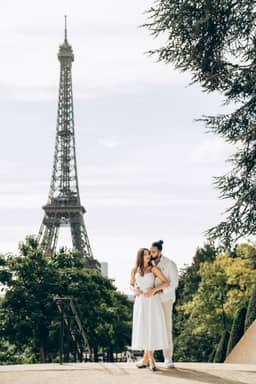
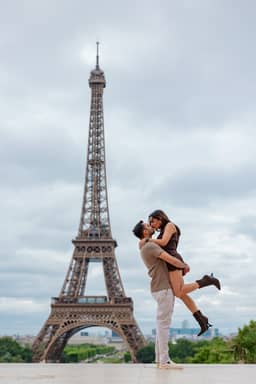
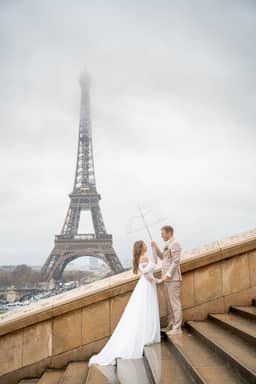
If your trip includes proper portraits, whether a couple, a family or a solo moment against the Eiffel Tower, the easiest way to stay on the right side of every rule is to go with someone local. A guided Paris photo tour from EUR 150 already knows which spots welcome a camera, when the light is best and how to work respectfully around residents and monuments, so you come away with beautiful images and not a single awkward moment.
What is closed on Sundays in Paris?
Sunday still moves to an older rhythm. Many shops, supermarkets and family businesses close for all or part of the day, and some restaurants take Sunday and Monday off, so it pays to plan. Buy groceries on Saturday, and do not count on a late-Sunday supermarket run. That said, the city is far from shut: cafes, museums, boulangeries (fresh Sunday bread is a ritual), morning markets, and the shops of tourist districts such as the Marais and the Champs-Elysees generally stay open. Treat Sunday as the day for a long lunch, a park, a gallery and a walk rather than errands, and you will be perfectly in step with the city.
Are the French punctual?
It depends on the setting, and knowing the difference matters. For anything professional or booked, a restaurant reservation, a tour, a doctor or a business meeting, be on time; punctuality is expected and lateness reads as careless. For a casual dinner at someone's home the opposite applies: arriving exactly on the dot can catch a host still cooking, so the gentle quart d'heure de politesse, a courteous ten to fifteen minutes late, is normal and even considerate. When in doubt, be punctual for anything with a clock or a booking, and relaxed only for informal social invitations.
The takeaway: a little effort goes a long way
None of this is a test you can fail. Parisians do not expect flawless French or perfect form; they respond to the effort. Lead with Bonjour, keep your voice low, dress with a little care, be patient in a queue and treat the city as someone's home rather than a backdrop, and you will meet the warm, funny, generous Paris that regulars know. The rude Parisian rarely survives a genuine Bonjour. And when you are ready to turn those beautifully mannered moments into photographs you will keep, browse the full catalog of Paris photo tours and photoshoots: real prices, instant online booking, and a local behind the camera who knows every one of these unwritten rules by heart.
FAQ
What is the single biggest etiquette rule in Paris?+
Say Bonjour first. Before your question, before English, before anything, greet the person: Bonjour by day, Bonsoir in the evening, ideally with Madame or Monsieur. In France a greeting opens every interaction in a shop, cafe or on the street. Skipping it is the most common reason visitors feel a cold response, and leading with it is the fastest way to warm one.
Are Parisians really rude to tourists?+
Rarely on purpose. What feels like rudeness is usually an etiquette mismatch: French social life is more formal, so warmth follows small rituals rather than arriving instantly. A visitor who skips the greeting and opens with a demand in English can read as abrupt. Lead with Bonjour and a word of French, stay patient and soft-voiced, and most Parisians turn out to be genuinely helpful.
What is la bise and do I have to do it?+
La bise is the French cheek-kiss greeting: light cheek-to-cheek touches, usually two in Paris, with a soft sound rather than a real kiss. It is for friends and relaxed settings, not first business meetings, where a handshake is correct. As a visitor you almost never have to start it. If someone leans in, simply touch cheeks lightly, left side first, and relax.
What are the main French dining etiquette rules?+
Rest your bread on the table rather than a side plate and tear off small pieces; keep both hands visible on the table, not in your lap; and eat at an unhurried pace, since the meal is the event. Avoid asking for major changes to a dish. The bill never comes on its own, so when you are ready, ask for l'addition, s'il vous plait.
How much should I tip in Paris?+
Very little, because service is included by law: you will see service compris and staff earn a proper wage. Tipping is optional. Locals just round up or leave small change for good service, a euro or two at a cafe, five to ten for a meal they loved. Round taxi fares up to the nearest euro. Cash is best, as card machines rarely prompt for a tip.
What is closed on Sundays in Paris?+
Many shops, supermarkets and family-run businesses close for all or part of Sunday, and some restaurants also shut on Sunday and Monday, so buy groceries on Saturday. The city stays lively, though: cafes, bakeries, museums, morning markets and the shops of tourist areas like the Marais and the Champs-Elysees generally open. Treat Sunday as a day for lunch, parks and galleries rather than errands.