Le Marais Photoshoot: Place des Vosges & Hidden Paris

The spots on the map
All 45 real photo locations — tap a pin to see the spot and book it.
Some Paris neighbourhoods pose for the camera. Le Marais lives in front of it. The city's oldest aristocratic quarter is a tangle of medieval lanes, seventeenth-century mansions, ivy-draped facades and vintage shopfronts — a place where a single afternoon on foot hands you more backdrops than a whole day of monument-hopping. A Le Marais photoshoot is the choice for anyone who wants Paris with character: cobblestones instead of crowds, colour instead of postcard cliché, and the graceful red-brick arcades of Place des Vosges instead of yet another Eiffel Tower frame.
This guide maps the whole neighbourhood for photographs — the arcades and garden of the oldest planned square in the city, the pastel houses of nearby Rue Crémieux (and how to shoot them without upsetting the people who live there), the hidden courtyards of the hôtels particuliers, where the light actually falls in the narrow streets, when the weekend crowds arrive, and how to fold in Notre-Dame and Île Saint-Louis just across the water. Every price below is real and bookable online in a couple of minutes.
Why Le Marais Is the Coolest Neighbourhood for a Paris Photoshoot
The Marais — literally the marsh, drained and built up from the Middle Ages — is the rare central district that Baron Haussmann's nineteenth-century demolitions largely spared. That is why it still keeps its medieval street plan: narrow, slightly crooked lanes that open without warning onto grand squares and secret gardens. Spread across the 3rd and 4th arrondissements on the Right Bank, it is small enough to shoot end to end and dense enough that you are never more than two minutes from your next frame.
It is also, today, the most stylish corner of Paris. Independent galleries, concept stores, vintage boutiques, falafel counters and café terraces all sit inside centuries-old stone, and that collision of old and current is exactly what makes the neighbourhood photograph so well. You can shoot a timeless, romantic portrait under an arcade and a sharp, editorial street-style look around the next corner without ever changing location. For couples, solo travellers, fashion content and families alike, it is the most versatile trendy Paris photoshoot backdrop in the city.
Place des Vosges: The Oldest Planned Square in Paris
If you photograph one place in the Marais, make it Place des Vosges. Inaugurated in 1612 as the Place Royale, it is the oldest planned square in Paris and the blueprint for the elegant European squares that followed. Thirty-six matching pavilions of rosy brick and pale stone stand over a continuous vaulted arcade, nine to a side, framing a perfectly symmetrical garden. Nothing else in the city gives you this much order, colour and shelter in a single frame.
The Arcades: Symmetry and Soft Light
The covered arcades are the square's secret weapon for photography. Their repeating stone arches create a natural leading line that flatters portraits and lends depth to every shot, and because they are roofed, the light inside stays soft and even all day — a lifesaver in harsh midday sun or light rain. Walk the full perimeter and you will find quieter stretches away from the corner cafés; early in the morning, you may have an entire colonnade to yourself.
The Garden and Victor Hugo's House
Step into the central garden — officially Square Louis XIII — for open sky, symmetrical rows of clipped limes, splashing fountains and the only real lawns in the quarter. It is the best spot in the Marais when you want brighter, airier light than the narrow streets allow. At number 6, in the south-east corner, stands the Maison de Victor Hugo, where the writer lived from 1832 to 1848; the house is now a free museum, and its corner of the arcade is a favourite for a literary, old-Paris mood.
Cobbled Lanes, Colourful Facades and Vintage Storefronts
Beyond the square, the Marais unfolds like a photographer's set of narrow pavé lanes, hand-painted shop signs and centuries-old facades in every shade from oxblood to sky blue.
Rue des Rosiers and the Historic Jewish Quarter
Rue des Rosiers is the heart of the Pletzl, the historic Jewish quarter, and one of the most atmospheric streets in Paris: old Hebrew lettering, bakeries, bookshops and the falafel counters that draw queues down the block. It is narrow, characterful and full of life — best shot earlier in the day, before the lunchtime crowds thicken.
Rue des Barres and the Medieval Marais
For the storybook Middle Ages, cut through to Rue des Barres, a sloping cobbled lane beside the church of Saint-Gervais with a surviving timber-framed house and a view that tumbles down toward the Seine. A few streets away, the Village Saint-Paul threads a series of connected courtyards full of antique and vintage dealers — pockets of calm, worn stone and green shutters that feel a world away from the boulevards.
Rue Crémieux: the Pastel Street (Please Respect the Residents)
The most photographed pastel street in Paris sits a short walk east of the Marais, just beyond Bastille in the 12th arrondissement: Rue Crémieux, a cobbled pedestrian lane of ivy-trailed houses painted in ice-cream colours. It is irresistible on camera — but it is also a row of private homes, and residents have pushed back hard against influencers and film crews who block their doorways. Shoot it, but shoot it kindly: keep your voice down, avoid early mornings and evenings, never lean on doors or touch the plants, and move on quickly. A respectful visitor is always welcome; a photoshoot that treats the street like a studio is not.
Hidden Courtyards: Inside the Hôtels Particuliers
The Marais's real secret waits behind its heavy carriage doors. From the seventeenth century this was the address of the French aristocracy, who built dozens of hôtels particuliers — grand private mansions folded around interior courtyards you would never guess from the street. Several are open to the public and free to photograph. The Hôtel de Sully, a Louis XIII mansion on Rue Saint-Antoine, hides a formal garden and — through a small door in its far corner — a genuine secret passage straight into Place des Vosges. The Musée Carnavalet, the city's own history museum, opens its courtyards and gardens for free, and the courtyards of the Archives Nationales are pure grand-siècle theatre. These enclosed, sheltered spaces are gold for elegant portraits when the streets are busy or the weather turns.
Street-Style or Romantic? Two Looks, One Neighbourhood
Few Paris locations flex between moods as easily as the Marais, which is why it suits such different shoots. For a romantic or classic gallery — engagements, honeymoons, timeless portraits — build around Place des Vosges: the arcades, the garden, the brick symmetry. For a street-style or editorial look, lean into the neighbourhood's fashion energy: the galleries and painted walls of the Haut Marais, vintage storefronts, café terraces and the graphic clutter of the shopping streets around Rue des Francs-Bourgeois and Rue Vieille du Temple. The smartest sessions do both, using a single walk to move from soft and romantic to sharp and current — exactly the kind of narrative a private cinematic walk is built to capture.
The Best Light in the Narrow Streets
Light behaves differently here than at the open monuments. Because the lanes are narrow and the buildings tall, direct sun only reaches the cobbles for a short window each day, and the rest of the time the streets rest in soft, even shade that is genuinely flattering — no squinting, no harsh shadows. Overcast days, so often a disappointment elsewhere, turn the whole quarter into a giant softbox and make the painted facades glow. When you do want warmth, chase the golden hour: late-afternoon light rakes along the upper facades and sets the brick of Place des Vosges alight, while the garden holds brighter, open light all day. Early morning is the other magic window — the cobbles are empty, the shopfronts still shuttered and colourful, and you can work the most famous corners in peace.
Weekend Crowds and Sunday Market Energy
Timing changes the Marais completely. It is one of the few parts of Paris where the boutiques open on Sundays, so weekends bring a buzzing, shoulder-to-shoulder energy — wonderful if you want life and movement in your frames, challenging if you want clean, empty streets. The Marché des Enfants Rouges, tucked off Rue de Bretagne and trading since 1615 as the oldest covered market in the city, is a burst of colour and food-stall bustle that rewards a candid, documentary style. The rule of thumb is simple: arrive at opening time on a weekday morning for calm and symmetry, or lean into a Saturday afternoon for street-style vibrancy — just know which one you are choosing.
Pairing the Marais with Notre-Dame and Île Saint-Louis
One of the Marais's quiet advantages is its position: walk south to the river and you are minutes from two of the most beautiful views in Paris. Cross Pont Marie or Pont Louis-Philippe onto Île Saint-Louis, the serene seventeenth-century island whose stone quays, tree-lined banks and honey-coloured townhouses feel like a village adrift in the middle of the city. From its western tip you look straight across to Île de la Cité and Notre-Dame, reopened in December 2024 and once again presiding over the Seine. A Marais session can drift down to these quays for a completely different, riverside chapter without so much as a taxi — the two neighbourhoods were made to be shot together.
Permits, Privacy and Photographing the Marais Respectfully
Good news first: a personal photoshoot with a handheld camera needs no permit in the public streets, squares and gardens of the Marais, Place des Vosges included. Authorisations only apply to large commercial productions with crews, lighting rigs and blocked pavements. What matters here is courtesy, because so much of the neighbourhood's charm is other people's homes. Keep doorways and narrow passages clear, follow any signs inside courtyards and museums — some hôtels particuliers and their gardens keep their own rules and hours — never point a lens through a private window, and leave the drone at home, since flying one over central Paris is forbidden. On residential lanes like Rue Crémieux, discretion is not just polite; it is the difference between the street staying open to visitors and being closed off for good.
Real Marais Photoshoot Packages and Prices
Here is what a Marais-style shoot actually costs on Kapturia — real prices, listed openly and bookable online today:
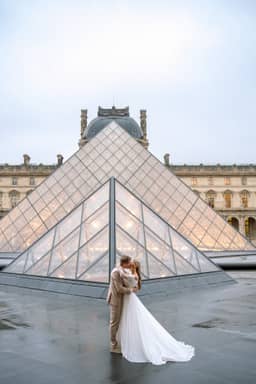
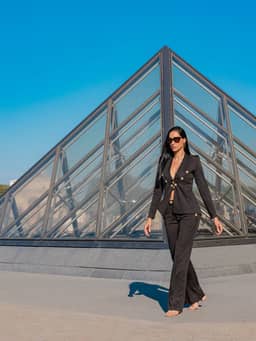
- Bespoke photography experience — from €150, a flexible private session you can steer through the Marais and over to the neighbouring Louvre, just along Rue de Rivoli. See the bespoke Louvre photography experience.
- Private cinematic walk — from €170, a story-driven walking shoot in the same wander-and-capture spirit the Marais is made for, centred on the elegance of the neighbouring Louvre and Palais-Royal. Book the private photoshoot and cinematic walk.
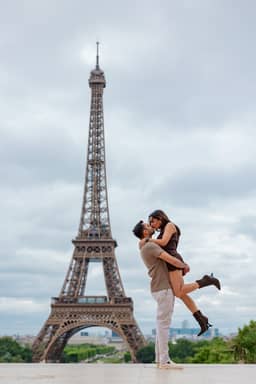
- Add a Paris icon — from €150, extend your gallery with a classic Eiffel Tower photo tour on another morning of your trip.
In other words, a private, professional Paris photoshoot starts at just €150, with the cinematic walking format from €170 — every rate shown upfront, with no hidden quote process and no waiting days for an email in French.
How Instant Online Booking Works
Most Paris photographers hide their prices behind a contact form and make you wait for a quote. Kapturia was built to do the opposite. Every service shows its real price and a live availability calendar: pick your date, choose a time slot, pay securely and receive an instant confirmation — often before you have even booked your flights. You can lock in your Marais morning from home, in your own language, with nothing left to negotiate on arrival. Browse the full catalogue of Paris photoshoots, compare real prices, and reserve the slot that fits your itinerary in about three minutes.
The Eiffel Tower is the postcard. The Marais is the Paris you will actually want on your wall.
FAQ
How much does a Le Marais photoshoot cost?+
A private, professional photoshoot in and around Le Marais starts at €150 on Kapturia for a bespoke session you can walk through the neighbourhood and the nearby Louvre. A story-driven private cinematic walk starts at €170. Every price is shown upfront and booked online instantly, with no hidden quotes and no waiting days for a reply — you can even confirm before your flights.
Where are the best photo spots in Le Marais?+
Start with Place des Vosges — its rosy-brick arcades and central garden form the oldest planned square in Paris. Add the cobbled medieval lanes around Rue des Barres and Rue des Rosiers, the hidden courtyards of the hôtels particuliers such as the Hôtel de Sully and Musée Carnavalet, and, a short walk east, the pastel houses of Rue Crémieux — always shot with respect for residents.
Can I take photos on Rue Crémieux?+
Yes, but gently. Rue Crémieux is a row of private homes whose residents have pushed back against influencers and film crews treating the street as a studio. Photography is not banned, but be discreet: keep your voice low, avoid early mornings and evenings, never block or lean on doorways, do not touch the plants, and move on quickly. Courtesy is what keeps the street open to visitors.
When is the best time of day for a Marais photoshoot?+
Because the lanes are narrow and tall, they sit in soft, even shade most of the day, which is beautifully flattering; overcast skies work brilliantly too. Come at opening time on a weekday morning for empty cobbles and quiet arcades. For warmth, shoot the late-afternoon golden hour, when light rakes the upper facades and the brick of Place des Vosges glows, while its open garden holds bright light all day.
Can I combine Le Marais with Notre-Dame or Île Saint-Louis?+
Easily, and on foot. From the southern edge of the Marais it is a few minutes across Pont Marie to Île Saint-Louis, with its quiet stone quays and tree-lined banks. From the island's tip you look straight to Île de la Cité and Notre-Dame, reopened in December 2024. A single session can move from the Marais lanes to the riverside without a taxi — the two areas were made to be shot together.