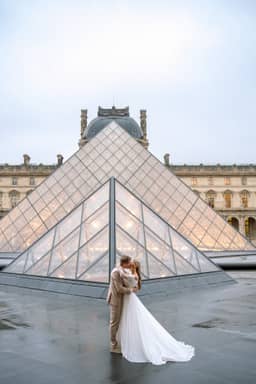
Best Photo Spots in Paris: The Definitive 2026 Guide to 12 Iconic Locations

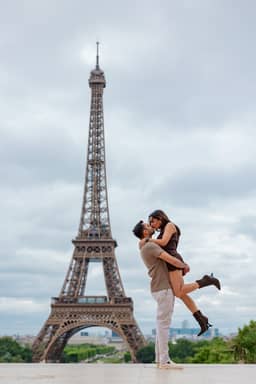
The spots on the map
All 45 real photo locations — tap a pin to see the spot and book it.
The best photo spots in Paris are rarely secrets — they are timing puzzles. Trocadéro at 11 am is a scrum of selfie sticks; Trocadéro at 6:40 am in June is a private marble stage with the Tower to yourself. This guide solves the puzzle for twelve locations: exact vantage points, the right metro stop, the best hour in summer and winter, a crowd strategy for each spot, and what to wear for each backdrop.
It is the routine local professionals run every week — and if you would rather walk it with someone who knows every angle, photoshoots on Kapturia book instantly from €150. Here is where Paris looks its best in 2026.
First, Learn the Three Light Windows of Paris
Keep these numbers in mind. Sunrise: around 5:50 am in June–July, but a merciful 8:40 am in December–January — winter is the season for photographers who hate alarms. Golden hour: the last 60–90 minutes before sunset, roughly 8:30–10 pm in midsummer and 3:30–5 pm in midwinter, when the limestone façades glow amber. Blue hour: the 20–40 minutes after sunset, when the sky turns cobalt, the monuments light up and the Eiffel Tower sparkles for five minutes at the top of each hour. Crowds run the opposite curve — thinnest at dawn, heaviest from late morning to sunset — which is why serious sessions start early.
If you remember one rule: in Paris, the hour matters more than the spot. An average location at sunrise beats a legendary one at noon.
1. Trocadéro — the Full-Frontal Eiffel Tower Classic
Why it works on camera: nowhere else gives you the entire Tower, head to toe, floating above the Seine behind marble, fountains and symmetrical staircases, with clean sightlines and zero traffic in your frame.
- The centre of the esplanade (Parvis des Droits de l'Homme) for the symmetrical postcard shot.
- The twin staircases toward the Fontaine de Varsovie — shoot from below so the steps become leading lines.
- The lower Jardins du Trocadéro, among the fountain basins, for a greener, less obvious frame.
Metro: Trocadéro (lines 6 and 9), thirty seconds from the view. Best hour: sunrise: 5:45–7 am in summer, 8:15–9 am in winter, empty esplanade, pink light. Golden hour is gorgeous but shared with hundreds.
Crowd strategy: arrive before 7:30 am or accept company; later, drop to the lower gardens, which thin out fast. What to wear: statement pieces — a long flowing dress, a sharp suit, strong reds or blacks against the pale stone. The windy esplanade animates fabric and hair — and eats hats. No accident that the captivating Eiffel Tower photo tour (from €150) starts here at first light.
2. Pont de Bir-Hakeim — Industrial Frames and Film Fame
Why it works: a double-deck steel bridge whose riveted columns form a receding colonnade — instant depth, instant drama, with the Eiffel Tower sliding into view between the pillars. Cinema has loved it from Last Tango in Paris to Inception.
- The central walkway, mid-bridge, with the colonnade converging behind you.
- The gap where the Tower aligns between two columns — shift a few metres until it locks into place.
- The staircase down to the Île aux Cygnes, a tree-lined island promenade at water level.
Metro: Bir-Hakeim (line 6) or Passy (line 6, prettier approach); RER C Champ de Mars–Tour Eiffel also works. Best hour: sunrise for an empty walkway — it becomes a commuter route by 8:30 am — or golden hour, when low sun turns the steel honey-coloured and line 6 trains rumble overhead.
Crowd strategy: weekend dawns are contested by fashion shoots; a weekday 7 am slot is safest. What to wear: graphic and urban — tailoring, leather, monochrome, good denim. Soft florals fight the rivets; structure wins.
3. Avenue de Camoëns — the Hidden Balustrade
Why it works: a short, silent Haussmann avenue in the 16th arrondissement ending in a stone balustrade and staircase, with the Eiffel Tower hovering at the end of the street like a theatre backdrop — a private discovery two minutes from Trocadéro's chaos.
- At the balustrade itself, subject leaning, Tower behind.
- Halfway down the staircase, shooting upward so the curved railing sweeps through the frame.
- Street level, using the cream façades as symmetrical walls.
Metro: Trocadéro (lines 6 and 9), then a four-minute walk. Best hour: 8–10 am, when soft light fills the avenue and residents are the only traffic; at golden hour the Tower is backlit for elegant silhouettes.
Crowd strategy: rarely more than one or two photographers, but it is a residential street — keep voices low and clear the pavement between shots. What to wear: quintessential Parisian: a trench coat, tailored knits, neutral tones against the cream stone.
4. Rue de l'Université — the Tower Between the Buildings
Why it works: from the 7th arrondissement, the Eiffel Tower erupts between two rows of Haussmann façades — the closest Paris gets to a jump-scare. The narrow street compresses perspective until the Tower feels impossibly huge.
- The classic frame: Rue de l'Université at the corner of Avenue de la Bourdonnais, looking toward the Tower.
- Rue Saint-Dominique, two blocks south, for the same trick with café awnings in frame.
- Mid-street — carefully, between traffic — for the dead-centre composition.
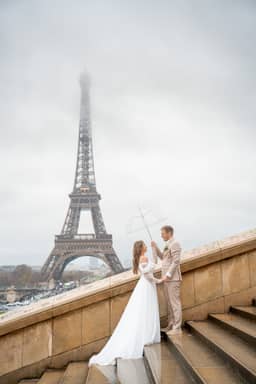
Metro: École Militaire (line 8) or RER C Pont de l'Alma, each under ten minutes on foot. Best hour: sunrise for an empty roadway — essential for the middle-of-the-street shot — or blue hour, when the Tower's lamps warm the whole corridor. Sunday dawn has almost zero traffic.
Crowd strategy: in high season a small queue of couples forms at the corner by mid-morning; dawn or dinnertime solves it. What to wear: something with movement — this composition loves a mid-stride walk or a twirl. Keep patterns quiet; the façades provide the detail.
5. The Louvre — Pyramids and the Silence of Cour Carrée
Why it works: two moods at one address. Cour Napoléon gives you the glass pyramid — geometry, reflections, modern edge — while the adjoining Cour Carrée is a Renaissance quadrangle so quiet at dawn you can hear its fountain. The honey-coloured stone flatters every skin tone.
- Facing the great pyramid with the Pavillon de l'Horloge behind it — the balanced hero shot.
- Standing on the low stone plinths around the pyramid for the floating-above-the-glass illusion.
- Inside the arched passage of the Pavillon Richelieu, using the arch as a frame.
- The centre of Cour Carrée by the fountain — empty even when the pyramid is not.
Metro: Palais Royal–Musée du Louvre (lines 1 and 7). Best hour: the courtyards are public — sunrise to 8:30 am delivers a nearly private pyramid even in July, and at blue hour the glass glows from within. Winter mornings often add mist. The museum closes on Tuesdays; the courtyards never do.
Crowd strategy: after 9 am the ticket queues wrap the pyramid — shift to Cour Carrée, calm at any hour. What to wear: clean lines and solid colours to answer the glass; in Cour Carrée, gowns feel at home — exactly the ground of the bespoke photography experience at the Louvre (from €150).
6. Palais-Royal — Striped Columns That Work at Noon
Why it works: the Colonnes de Buren — black-and-white striped columns of varying heights — are the most graphic backdrop in Paris, and the surrounding arcades throw open shade, so the spot performs even in harsh midday sun or grey drizzle; the Galerie d'Orléans colonnade and the rose garden add two more scenes within fifty metres.
- Seated or standing on one of the taller columns, shot from a low angle down the rows.
- The Galerie d'Orléans colonnade for mirror-perfect symmetry.
- The garden fountain, framed by lime trees and the famous green chairs.
Metro: Palais Royal–Musée du Louvre (lines 1 and 7), one minute away. Best hour: the rare spot that forgives timing — before 10 am for empty frames, but midday and overcast days genuinely work.
Crowd strategy: weekend afternoons bring queues for the tallest column; on a weekday morning you share the courtyard with pigeons. What to wear: black and white to echo the stripes, or one saturated colour — red, cobalt, yellow — that pops against them. Avoid grey: it dissolves into the columns.
7. Pont Alexandre III — Gilded Glamour Over the Seine
Why it works: the most ornate bridge in Paris — winged gilded statues, garlanded Art Nouveau lamps, and sightlines to the Grand Palais's glass roof on one bank and the golden dome of Les Invalides on the other; down at water level, the lower quay adds arches and reflections.
- The centre of the bridge, facing the Invalides dome, lamps marching into the distance.
- Beneath a candelabra lamp post, shot wide to include the gilded column tops.
- The stone steps down to the Seine-side quay for waterline angles under the bridge's arch.
Metro: Invalides (lines 8 and 13, RER C) opens directly onto the bridge; Champs-Élysées–Clemenceau (lines 1 and 13) works from the right bank. Best hour: golden hour is the event — the last hour before sunset (around 9 pm in June, 4 pm in December) sets the gold statues on fire. Sunrise offers the same ornament with nobody on it.
Crowd strategy: cars cross constantly, so work from the wide pavements; at dawn you mostly share the bridge with elopement shoots. What to wear: the glamour spot — evening gowns, sharp suits, gold accents echoing the statues; flowing fabric loves the river wind on the lower quay.
8. Montmartre — Village Paris on a Hill
Why it works: Montmartre is the counterweight to the monuments — cobbled lanes, ivy-covered walls, the famous pink café on Rue de l'Abreuvoir and the white domes of Sacré-Cœur above it all, plus the only full-city panorama on this list from the basilica steps.
- Rue de l'Abreuvoir at the pink café corner — a strong contender for prettiest street in Paris.
- The same street looking downhill, with ivy walls and old lampposts framing the lane.
- The Sacré-Cœur steps for the rooftop panorama, and Rue du Chevalier-de-la-Barre behind the basilica for its domes without the crowds.
Metro: Abbesses (line 12 — take the lift) or Anvers (line 2) plus the funicular. Best hour: sunrise, non-negotiable in summer — by 10 am the hill is thronged year-round. In autumn and winter, morning mist over the rooftops is a gift; golden hour glows, but you share the steps.
Crowd strategy: weekday dawn; shoot Rue de l'Abreuvoir before the cafés open, then walk downhill as the tour groups climb up. What to wear: texture over formality — knits, a beret if you dare, autumnal rust and burgundy against the ivy. Flat shoes for the steep cobbles; save heels for standing poses.
9. Jardin des Tuileries — Chairs, Alleys and Autumn Gold
Why it works: royal-garden geometry between the Louvre and Place de la Concorde — raked gravel alleys, sculpted hedges, statues, and the iconic sage-green metal chairs. In late October and early November the chestnut trees turn the central alley into a golden tunnel.
- The chairs around the Grand Bassin Rond, subject seated, the Louvre soft in the background.
- The central Grande Allée, shooting toward the Louvre for maximum depth.
- The side bosquets — tighter tree tunnels with dappled, flattering light.
Metro: Tuileries (line 1) or Concorde (lines 1, 8 and 12). Best hour: the garden opens at 7 am in high summer, 7:30 the rest of the year — the first two hours belong to joggers and photographers. Golden hour stretches long shadows down the alleys.
Crowd strategy: the garden is vast — just angle away from the main axis for clean frames. What to wear: soft and romantic — linen and pastels in summer, a camel coat in autumn. The natural home of picnic-styled and family sessions.
10. Île Saint-Louis — Riverbank Paris Without the Landmarks
Why it works: seventeenth-century façades, plane trees leaning over cobbled quays, and water-level views across to the flying buttresses of Notre-Dame. No single monument dominates — these frames read as cinema rather than postcard.
- Quai d'Orléans, with Notre-Dame's chevet across the river.
- The corner of Quai de Bourbon, all shuttered façades and stone bollards.
- The steps down to the water near Pont Saint-Louis — and Pont de la Tournelle across the water for the full island line-up.
Metro: Pont Marie (line 7), one bridge from the island. Best hour: golden hour, when low evening sun rakes along the quays and warms the stone; autumn dawns bring mist on the Seine. On summer evenings the quay edges fill with picnickers — use them as ambience or come at sunrise.
Crowd strategy: never Trocadéro-level; walk fifty metres from Pont Saint-Louis and you are alone. What to wear: timeless over trendy — good denim and a knit, a trench, olive and rust mid-tones that sing against the muted stone.
11. The Covered Passages — Your Rain Insurance
Why it works: Paris's 19th-century shopping arcades put a glass roof over your session — soft, even, shadowless light in any weather. Mosaic floors, mahogany shopfronts and globe lamps do the set-dressing. When the forecast betrays you, the shoot moves here instead of being cancelled.
- Galerie Vivienne (metro Bourse, line 3): the rotunda and the famous mosaic floor.
- Galerie Véro-Dodat (metro Palais Royal–Musée du Louvre, lines 1 and 7): checkerboard marble and brass-trimmed boutiques.
- Passage des Panoramas (metro Grands Boulevards, lines 8 and 9): vintage signage and bistro glow.
Best hour: late morning to mid-afternoon, when daylight through the glass peaks — one of the few Paris settings where midday is ideal. Hours vary by gallery; weekday 10 am–4 pm is the safe bet.
Crowd strategy: Panoramas gets a lunchtime rush from nearby offices; Vivienne stays calm before 11 am. Ask before shooting directly into a boutique. What to wear: rich textures that reward warm lamplight — velvet, silk, tailoring, jewel tones. And no umbrella required.
12. Père-Lachaise — the Unexpected Editorial Choice
Why it works: not for everyone, and that is its power. The world's most visited cemetery is also one of the most beautiful landscapes in Paris — cobbled avenues under a chestnut canopy, moss, wrought iron and morning fog. Portraits here read as editorial and literary.
- The sloping cobbled avenues just inside the main Boulevard de Ménilmontant entrance.
- The tree-vaulted Avenue Circulaire, at its best in October colour.
- The higher, quieter sections near the Gambetta entrance, shooting as you descend.
Metro: Père Lachaise (lines 2 and 3), or Gambetta (line 3) to start at the top. Best hour: gates open at 8 am on weekdays (slightly later at weekends) and close around 6 pm in summer, 5:30 pm in winter; misty autumn mornings and low winter light are unbeatable.
Crowd strategy: the grounds are so vast that solitude is the default. Etiquette matters: this is an active cemetery — stay discreet, skip flamboyant styling and props, and give any mourners a wide berth. What to wear: muted elegance — a long dark coat, deep greens and blacks. Editorial, not festive.
Turn the Spots Into a Route — or Let a Local Do It for You
The twelve locations cluster into natural circuits. Trocadéro, Avenue de Camoëns, Bir-Hakeim and Rue de l'Université form a golden triangle around the Tower that fits a single sunrise. The Louvre, Palais-Royal and the Tuileries chain into a second morning. Montmartre deserves its own dawn; Pont Alexandre III and Île Saint-Louis love the evening; the passages and Père-Lachaise wait in reserve.
The honest caveat: knowing a vantage point is not the same as being photographed well at it — someone has to stand in the frame, and it should be you. The simplest upgrade is a local professional behind the camera. Photoshoots on Kapturia book instantly online from €150, and if you want two icons in one outing, the Capture Timeless Moments session pairs the Eiffel Tower and the Louvre in a single itinerary from €350. Browse the full catalogue of Paris photoshoots, pick your light window — your only job is to show up and, for once, be in the photograph.
FAQ
What is the best time of day to take photos in Paris?+
Sunrise, almost everywhere. It lands around 5:50 am in June–July and a gentler 8:40 am in December–January, and it is the only window when Trocadéro, Montmartre and the Louvre courtyards are genuinely empty. Golden hour — the last 60–90 minutes before sunset — gives the warmest stone tones, and blue hour adds lit monuments and the Eiffel Tower's hourly five-minute sparkle. Late morning to mid-afternoon is the weakest window: hard light and the biggest crowds.
Where can I photograph the Eiffel Tower without crowds?+
Go at dawn, or go around the corner. Avenue de Camoëns, a quiet residential street with a stone balustrade framing the Tower, rarely holds more than a couple of photographers. Pont de Bir-Hakeim is calm before 8 am, and Rue de l'Université at sunrise gives you the Tower between Haussmann façades with empty pavements. Even Trocadéro itself is surprisingly private before 7:30 am — arrive early rather than searching for a mythical crowd-free afternoon.
What should I do if it rains during my Paris photoshoot?+
Move under glass instead of cancelling. The covered passages — Galerie Vivienne, Galerie Véro-Dodat, Passage des Panoramas — put a 19th-century glass roof over your session, with soft, even light that flatters every face. The arcades of Palais-Royal also shelter you while keeping a Parisian backdrop. Light drizzle outdoors can even help: wet cobblestones reflect the lamps, umbrellas make romantic props, and grey skies act as a giant softbox.
How many photo spots can I cover in one photoshoot?+
Plan one to three, grouped by geography. A one-hour session is best spent at a single location with two or three micro-vantage points, like Trocadéro plus the Camoëns staircase. With two to three hours you can chain a circuit — Trocadéro, Bir-Hakeim and Rue de l'Université, or the Louvre, Palais-Royal and the Tuileries. On Kapturia, the Capture Timeless Moments session pairs the Eiffel Tower and the Louvre in one itinerary from €350.
Do I need a permit for a photoshoot in Paris?+
For a personal portrait, couple or family session on public streets, squares and bridges with a handheld camera, no permit is required — these spots are photographed this way every single day. Rules tighten for large productions, drones, and some managed interiors: museums restrict professional equipment, and Père-Lachaise expects discretion as an active cemetery. A local photographer booked through Kapturia knows the current rules at each location, so you never have to think about them.