Is Paris Safe? A Calm, Honest Guide for Travelers

Yes — Paris is a safe city for travelers. Millions of visitors explore it every year without any trouble, and the great majority go home with nothing worse than sore feet and a full camera roll. Violent crime against tourists is rare. The real risk in Paris is petty theft: pickpocketing, plus a handful of well-rehearsed street scams that target distracted visitors in a few predictable places. Learn how they work, keep your bag zipped, and you remove almost all of the danger. This guide walks you calmly through the classic scams, the pickpocket hotspots, the areas that stay lively late, and the simple habits that let you relax and enjoy the city.
The goal here is not to frighten you — it is the opposite. Paris fully deserves its reputation as a romantic, walkable, welcoming capital. A little awareness is all it takes to turn an anxious tourist into a relaxed traveler, and once you can spot a scam coming from across the square, the whole city opens up to you.
Is Paris Safe for Tourists Right Now?
For the vast majority of visitors, yes. Central Paris — the arrondissements where you will actually spend your days, from the Eiffel Tower and the Louvre to Montmartre and the Marais — is busy, well-lit and heavily policed, especially around the monuments. You can walk the main boulevards late into the evening alongside locals, tourists and late diners. What you are guarding against is not muscle but sleight of hand: someone lifting a phone from a back pocket, or a small group creating a distraction while an accomplice quietly opens your bag. Treat Paris exactly as you would any other big global city — London, New York, Barcelona, Rome — and you will be absolutely fine.
What Are the Classic Paris Scams to Avoid?
Paris has a small, familiar cast of street scams that reappear year after year in the very same spots. None of them are physically dangerous; all of them rely on your politeness and a single moment of distraction. A confident 'non, merci' and a step to keep walking defeats every one.
- The friendship bracelet (Sacré-Cœur). On the steps below the Sacré-Cœur in Montmartre, smiling men try to tie a string bracelet around your wrist or finger 'as a gift'. Once it is on, they demand payment and can get pushy. Keep your hands in your pockets, don't let anyone take your wrist, and walk on.
- The petition and clipboard. Often young people near the Eiffel Tower, the Louvre or Notre-Dame ask you to sign a petition for a good cause. It is a distraction: while you look at the clipboard, a partner goes through your bag, or they pressure you for a 'donation'. A simple head shake and no eye contact ends it.
- The gold ring. Someone bends down beside you, 'finds' a gold ring on the pavement and asks if it is yours. When you say no, they press you to keep it — then chase you for money, or use the moment to distract you. It is not gold. Just keep walking.
- Fake surveys and charity collectors. Clipboards again, sometimes claiming to raise money for a deaf or disabled association. The aim is to crowd you, get a signature and then extract cash. A polite refusal is all you need.
- The three-cup game (shell game). On some bridges and busy crossings you may see a fast-talking man shuffling three cups or matchboxes over a ball and inviting bets. It is rigged, the 'winners' in the crowd are accomplices, and while you watch, your pockets are the real prize. Never play, and never stop to look.
- The 'helpful' stranger at the ATM. Someone offers to help you at a cash machine or a ticket machine, then reads your PIN or swaps your card. Use ATMs inside banks where you can, cover the keypad with your other hand, and refuse all offers of help. If a machine keeps your card, cancel it with your bank immediately.
Where Do Pickpockets Operate in Paris?
Pickpockets go where the crowds are thickest and attention is lowest — the places where you are gazing up at something beautiful or pressed against strangers. Be just a little more alert in these spots and you close the window they depend on:

- The metro, especially Line 1. Line 1 runs directly under the big sights — Champs-Élysées, Louvre, Bastille — so it is the most tourist-heavy line and the most worked by pickpockets. Watch the doors: a classic move is to lift a phone and step off just as they close.
- Crowded stations and escalators such as Châtelet–Les Halles, Gare du Nord and Montparnasse, where a sudden press of people is perfect cover.
- Trocadéro. The postcard view of the Eiffel Tower means everyone is holding a phone in the air and staring through the screen. Bags hang open and back pockets are exposed. It is gorgeous — just keep one hand on your things.
- Museum queues and entrances at the Louvre and the other big attractions, where lines bunch together and everyone is fumbling for tickets.
- The Eiffel Tower lawns, the Champs-Élysées, and packed RER trains to and from the airports, where luggage and tired travelers make easy targets.
How Do You Avoid Pickpockets in Paris?
Prevention is almost embarrassingly simple. None of this calls for a money belt or paranoia — just a few habits that quickly become automatic:
- Carry your bag in front of you. In crowds, wear a cross-body bag on your chest, zipped shut, with a hand resting on it in the metro.
- Keep your phone out of your back pocket. Use a front pocket, an inside jacket pocket or a zipped bag. Back pockets and open tote bags are the softest targets in the city.
- Don't flash valuables. Leave the heavy jewellery and the brand-new luxury watch at the hotel; a discreet traveler is simply an uninteresting target.
- Split your cash and cards. Carry the day's money and one card; leave the rest and your passport in the hotel safe, and keep a photo of your passport on your phone.
- Stay aware at the doors. On the metro, be extra alert in the seconds as doors open and close — the pickpocket's favourite moment.
- If someone crowds you, protect your bag and move. A sudden cluster of people, a 'spilled' drink, a map pushed into your face — treat any distraction as your cue to put a hand on your valuables and step away.
Which Areas Are Lively Late, and Where Should You Be Extra Alert?
Paris is a late city, and much of it is wonderful after dark. The Seine quays, the Marais, Saint-Germain-des-Prés, the Latin Quarter, the Canal Saint-Martin and the grand boulevards stay full of people eating, strolling and enjoying the evening — you are rarely alone, which is exactly what makes them feel safe. Well-touristed monuments stay lit and watched late into the night.
As in every capital, a few situations simply call for a little more attention — not avoidance, just common sense: near-empty metro platforms and long underground corridors very late at night; the busiest transit hubs such as Gare du Nord, Barbès, Château Rouge and Stalingrad after midnight; and anywhere the crowd thins out and you no longer see families or diners around you. If a street feels quiet and off, trust that feeling, order a taxi or an official ride-hail, and don't walk it alone at three in the morning — advice that holds true in any big city on earth.
What Should You Do in an Emergency?
First, know that you almost certainly will not need this — but it is reassuring to carry. The one number to remember is 112, the European emergency number: it works from any phone, can connect you to an English speaker, functions anywhere in France, and reaches police, ambulance or fire. If you prefer the direct lines, 17 is the police, 15 is medical (SAMU) and 18 is the fire brigade, who also respond to medical emergencies.
- If your bag or phone is stolen, report it at any police station (commissariat); you will need that report for your insurance and to replace documents.
- If a card is stolen, freeze it instantly in your banking app or call your bank's emergency line.
- Lost passport? Contact your embassy or consulate; the police report speeds everything up.
- Above all, stay calm. Scammers and pickpockets want a flustered target. If you feel crowded, step into a shop, a café or a hotel lobby — staff are used to helping, and simply moving into a busy, lit space defuses almost any situation.
Can You Relax and Actually Enjoy Paris?
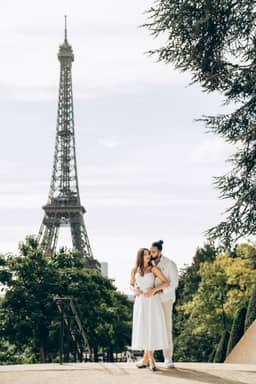
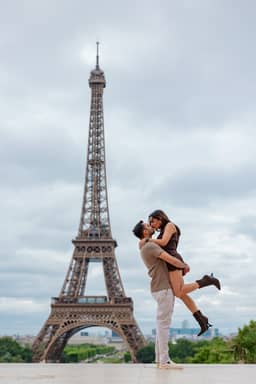
Absolutely — and that is the whole point. Once your bag is zipped and you can wave off a clipboard without a second thought, Paris becomes the easy, romantic city you came for. One of the calmest ways to experience it is with a private photoshoot at the Eiffel Tower and the Louvre: a booked local photographer is, in effect, a trusted local by your side — someone who knows the safe corners, the quiet hours and the rhythm of the crowds, so you can focus on the moment while they mind the frame and your surroundings. It quietly turns the busiest, most pickpocketed viewpoints into a relaxed, guided experience.
Browse the full catalog of Paris photoshoots and experiences to find a session that fits your trip. Prices are shown upfront and you can book online in minutes — one less thing to think about, so you can spend your energy on the safest and most beautiful version of Paris.
Stay aware, not afraid. Paris rewards the relaxed traveler — and a zipped bag is really all it asks in return.
FAQ
Is Paris safe for tourists?+
Yes. Paris is one of the world's most visited cities, and the overwhelming majority of travelers enjoy it without any trouble. Violent crime against tourists is rare; the real risk is petty theft such as pickpocketing and a few well-known street scams. Central, touristy areas are busy and well-policed. Keep your bag zipped and your phone out of your back pocket, and you remove almost all of the risk.
What are the most common scams in Paris?+
The classics reappear in the same spots: the friendship-bracelet scam on the Sacré-Cœur steps, the petition or clipboard distraction near big monuments, the 'gold ring' found on the ground, fake charity surveys, the rigged three-cup game on bridges, and 'helpful' strangers at ATMs. None are dangerous — they rely on politeness and distraction. A firm 'non, merci' and simply walking on defeats every one of them.
Where are the pickpocket hotspots in Paris?+
Pickpockets work the busiest, most distracted places: the metro (especially Line 1, which links the main sights), crowded hubs like Châtelet and Gare du Nord, the Trocadéro viewpoint where everyone is filming the Eiffel Tower, the queues at the Louvre, and packed RER trains to the airports. Be a little more alert as metro doors open and close, and keep a hand on your bag in any crowd.
Is the Paris metro safe at night?+
Generally yes — the metro is used by locals late into the evening and is a normal way to get around. The main risk is pickpocketing in crowds rather than anything violent. Late at night, be more aware on near-empty platforms and in long corridors, keep your phone put away, and if a station or carriage feels off, wait for the next train or take an official taxi or ride-hail instead.
What is the emergency number in Paris?+
Dial 112, the European emergency number: it works from any phone, reaches police, ambulance and fire, and can connect you with an English speaker anywhere in France. For direct lines, 17 is the police, 15 is medical (SAMU) and 18 is the fire brigade. If your phone or bag is stolen, file a report at any police station (commissariat) for your insurance and to replace documents.
Is Paris safe for solo female travelers?+
Yes — countless women visit Paris alone every year and have a wonderful, easy time. The usual big-city sense applies: stay in lively, well-lit areas at night, keep your bag zipped, and feel free to ignore anyone who is too insistent. Trust your instincts; if a street feels quiet and off, take an official taxi or ride-hail. A friendly but firm 'no' is completely normal and effective here.